


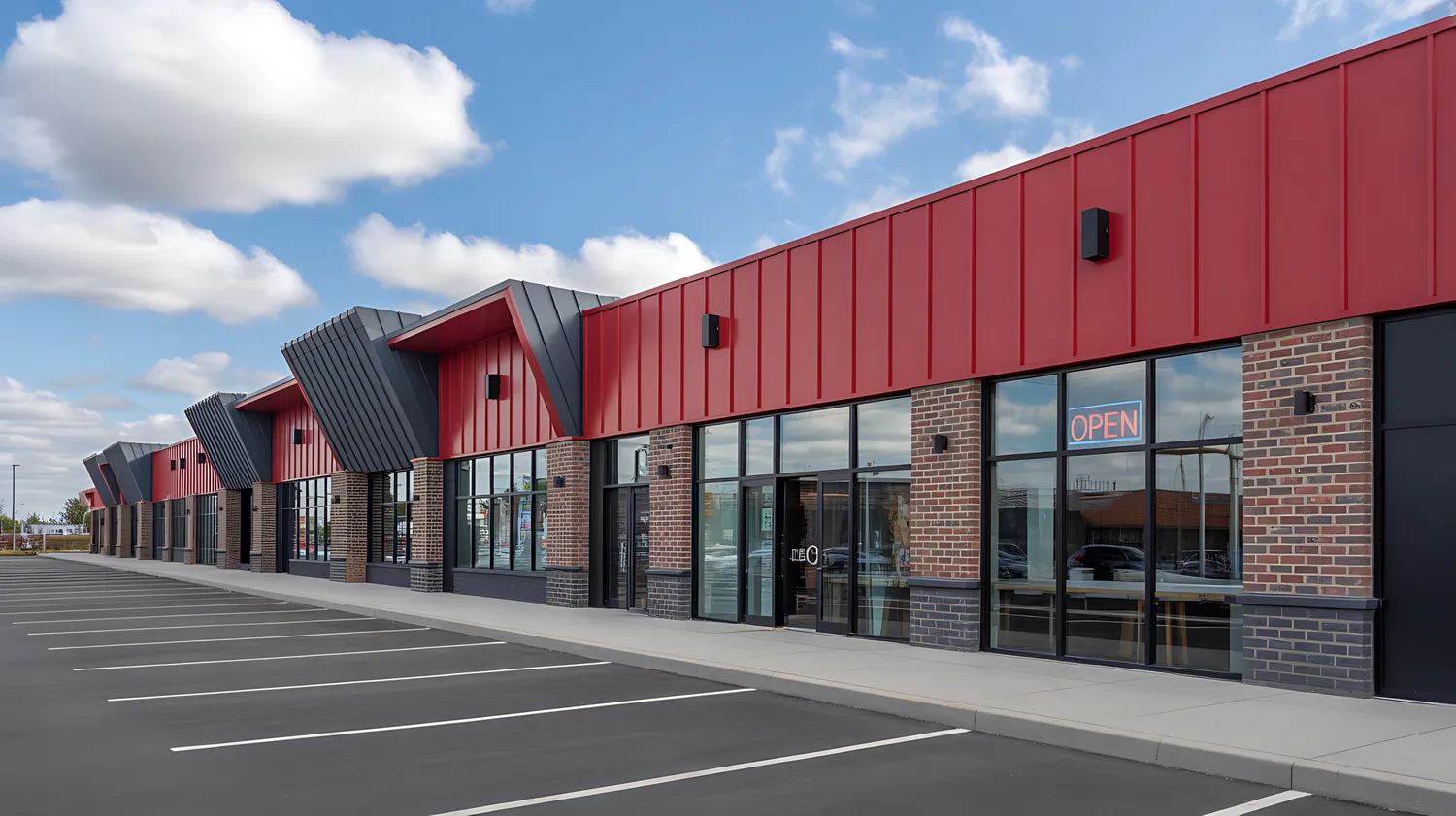
Your parking lot is the first part of your property every customer, employee and visitor uses. Clear, bright striping tells drivers where to park, where to walk and how to move safely. Faded, confusing lines create frustration, fender-benders and possible legal exposure.
This guide covers what property owners and facility managers should know about parking lot striping: why it matters, what the ADA requires, how to plan a layout and which paint types fit different conditions.
What Is Parking Lot Striping?
Parking lot striping is the process of painting lines, symbols and markings on asphalt or concrete to organize traffic and parking. It includes:
- Parking stall lines
- Accessible (ADA) parking spaces, access aisles and symbols
- Directional arrows and stop bars
- Crosswalks and pedestrian walkways
- Fire lanes and no-parking zones
- Loading zones and curb markings
- Numbered or reserved spaces
Striping applies to indoor surfaces too. Warehouses and industrial facilities use floor markings for forklift lanes, pedestrian walkways and storage zones. MSCH handles both through our parking lot and warehouse striping services.
Why Parking Lot Striping Matters
Safety
Clear markings separate vehicles from pedestrians, show traffic direction and prevent confusion at intersections inside the lot. Crosswalks and stop bars are especially important near building entrances.
Liability
Poorly marked lots can contribute to accidents. Visible, well-kept markings show that a property owner is taking reasonable steps to keep visitors safe.
Efficient Use of Space
A properly planned layout often fits more vehicles into the same area than a faded or poorly designed one, and it improves traffic flow at busy times.
Curb Appeal
A freshly striped lot looks cared for. Along with exterior building cleaning and good lighting, it shapes how visitors see your business before they walk in.
ADA Parking Requirements: What Property Owners Need to Know
Accessibility is one of the most important parts of any striping project. According to the U.S. Department of Justice, when a business or a state or local government restripes a parking lot or structure, it must provide accessible parking spaces that meet the 2010 ADA Standards for Accessible Design. Businesses that serve the public also have an ongoing obligation to remove access barriers in existing lots when it is readily achievable. In other words, a restriping project is the natural time to make sure your lot complies.
Key points from the federal guidance include:
- Number of accessible spaces: the minimum scales with the size of the lot. For example, a lot with 1 to 25 spaces needs at least one accessible space, 26 to 50 spaces requires two, and 51 to 75 requires three, with the count rising from there.
- Van-accessible spaces: at least one of every six accessible spaces, and never fewer than one, must be van-accessible.
- Access aisles: access aisles next to accessible spaces must be at least 60 inches wide, and van-accessible spaces can be designed as a 96-inch-wide space paired with a 96-inch-wide access aisle.
- Signage and slope: the identification sign must be mounted at least 60 inches above the ground, measured to the bottom of the sign, and slopes in the space may not exceed 1:48 in any direction.
For full details, see the Department of Justice’s ADA Compliance Brief: Restriping Parking Spaces. Local codes in Illinois municipalities may add requirements, so it’s worth checking with your village or city before a major layout change.
Planning Your Parking Lot Layout
Stall Angle
- 90-degree parking fits the most spaces and supports two-way traffic, which makes it common for employee lots.
- 60-degree or 45-degree angled parking makes entering and exiting easier and works well with one-way aisles, which suits retail and customer-facing lots.
Traffic Flow
Plan entrances, exits and drive aisles so traffic moves logically. Directional arrows and one-way markings keep drivers from cutting across stalls.
Pedestrian Routes
Mark crosswalks between parking areas and building entrances, and make sure accessible routes connect ADA spaces directly to an accessible entrance.
Special Zones
Include fire lanes, loading zones, delivery areas, reserved spaces and electric vehicle charging spaces where needed. Fire lane requirements are usually set by the local fire department.
Types of Parking Lot Striping Paint
Water-Based (Latex) Traffic Paint
This is the most common choice for commercial lots. It dries quickly, has a low odor, contains fewer VOCs and adheres well to asphalt, including freshly sealcoated surfaces.
Solvent-Based (Oil-Based) Paint
Solvent-based paint adheres well in cooler conditions and holds up to heavy traffic, but it has higher VOC content and faces environmental restrictions in some areas.
Thermoplastic
Thermoplastic is a heated material that bonds to the pavement. It is thick, highly visible and very durable, so it’s often used for crosswalks, stop bars and symbols in high-traffic areas.
Epoxy and Specialty Coatings
These are frequently used on concrete surfaces and warehouse floors, where they resist chemicals, forklift traffic and abrasion.
Reflective glass beads can be added to most paints to improve nighttime visibility, which is especially useful in lots with limited lighting.
Signs It’s Time to Restripe
- Lines have faded, chipped or become hard to see, especially at night or in rain.
- You’ve recently sealcoated, resurfaced or repaved.
- Your accessible spaces no longer match current ADA requirements.
- Traffic flow or building use has changed.
- Winter has taken its toll. Chicago’s freeze-thaw cycles, snowplow blades and de-icing salt are hard on pavement markings, so many local properties check their lines every spring.
Preparing a Lot for Striping
Paint only adheres properly to a clean, dry, sound surface. Before striping:
- Sweep and clean the surface to remove dirt, debris and loose material. Heavily stained areas may need power washing.
- Repair cracks and potholes so new lines aren’t painted over damage.
- Check lighting so the new markings are visible after dark. Our electrical and lighting services can help.
- Plan around business operations and use cones and signage to redirect traffic.
MSCH provides full parking lot services, from cleaning to striping to lighting, so one partner can handle the whole project.
Frequently Asked Questions
Do I have to add ADA spaces when I restripe?
Under federal guidance, restriping is when accessible parking must meet the 2010 ADA Standards. Review your layout before any restriping project.
Can warehouse floors be striped too?
Yes. Forklift lanes, pedestrian walkways and storage zones are commonly marked with durable floor coatings.
What’s the most durable striping material?
Thermoplastic and epoxy-based coatings are generally the most durable. Water-based traffic paint is the most common all-around choice for standard lots.
Get Your Lot Marked Right
Clear, compliant striping makes your property safer and more welcoming. Contact MSCH for a free estimate on parking lot or warehouse striping anywhere in Chicago and the suburbs.


